“You’re looking at a ten-minute interaction, and 50 years in landfill, for a splash apron.”
Mary O’Riordan spent years on the frontline of healthcare before co-founding HaPPE Earth. She knows exactly where all the single-use PPE goes. For most of it, there was nowhere useful for it to go.
Most people outside clinical settings never see how much single-use plastic keeps healthcare running, or where it goes afterwards. Most medical PPE ends up in general or hazardous waste streams, with no viable alternative.
HaPPE Earth was built to change that. The compostable aprons and bags at the heart of their system are made by Bio4Pack. This is how the partnership works in practice.
The scale of the problem no one talks about
Single-use plastic became standard across healthcare for good reason. It reduces infection risk and works at scale. The problem is that most of it can’t go anywhere useful afterwards.
A 2025 report by Eunomia and Systemiq put the scale in concrete terms: Europe’s healthcare sector generated more than 900,000 tonnes of single-use plastic in 2023 alone. That produced around five million tonnes of CO₂ equivalent and cost health providers €23 billion. Without meaningful change, that cost is projected to exceed €34 billion by 2040.
Patient-facing items can’t be recycled. Hazardous medical waste has its own disposal requirements. General PPE, the hairnets, beard masks, footcovers, and splash aprons used in the billions, across global healthcare, piles up in landfill. The economics compound the problem: virgin plastic remains cheaper than alternatives, making it the default in cost-sensitive health systems.
The report recommended a tiered response: reduce unnecessary use, shift to reusable alternatives where safe, and substitute with compostable materials where reduction and reuse aren’t an option. For many single-use items, that third category is the only one that works. You can’t launder a single-use splash apron. You can make it from a material that goes back to soil.
HaPPE Earth set out to build one.
What makes it compostable
The idea came from outside a clinical context entirely. Mary’s cousin, thinking as a mother rather than a healthcare professional, asked a question that had never come up in all of Mary’s years on the ward: why couldn’t these items be made from a different material? The challenge was making a compostable alternative that actually performed in a clinical environment.
Compostable PPE is made from plant-based materials, typically starch, cellulose, or similar biobased feedstocks, not the fossil-fuel-derived plastics used in standard medical PPE. In the right conditions, those materials break down into water, CO₂, and organic matter, returning to soil rather than accumulating in landfill. The catch is that they need industrial composting infrastructure to do it. That’s exactly what HaPPE Earth built alongside their product range.
Their range includes splash aprons, hairnets, beard masks, and footcovers. HaPPE Earth designed the end-of-life system around them.
What happens to it after use
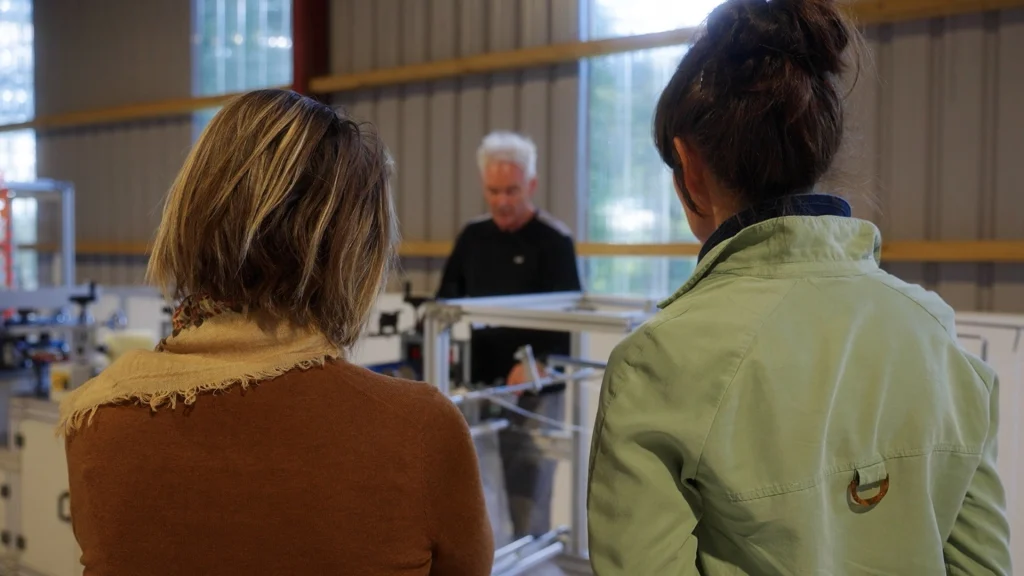
Compostable PPE only delivers on its promise if there’s somewhere for it to go. HaPPE Earth built that too: an on-site closed-vessel bio-digestion system that processes compostable PPE alongside hospital food waste and converts both into a nitrogen-rich soil enhancer.
The process cuts the volume of waste going to landfill, and the output feeds directly back into growing the plant-based feedstocks the products are made from. The whole system is built on one principle: nature doesn’t waste anything.
What healthcare workers actually experience
When HaPPE Earth introduced the compostable splash apron to healthcare workers, the response was immediate. Healthcare workers had a name for what they felt: “guilt free.” Knowing the apron was made from plant-based material and would end up as a soil enhancer rather than landfill removed something they’d been carrying on every shift. The product also happens to be more breathable than standard PPE, which makes adoption easier.
Healthcare workers know exactly how much plastic they get through. They don’t have a choice about it; infection control isn’t optional. But rather than their daily PPE use being waste with nowhere to go, it becomes an active contribution to the closed loop. That shift matters to people doing the job every day.
Switching to compostable healthcare PPE is a procurement decision as much as a clinical one. Procurement managers need to evaluate suppliers, check compliance certifications, and sign off on new materials. Clinical buy-in has to come alongside institutional approval. HaPPE’s rollout shows both are achievable.
The products that make the system work
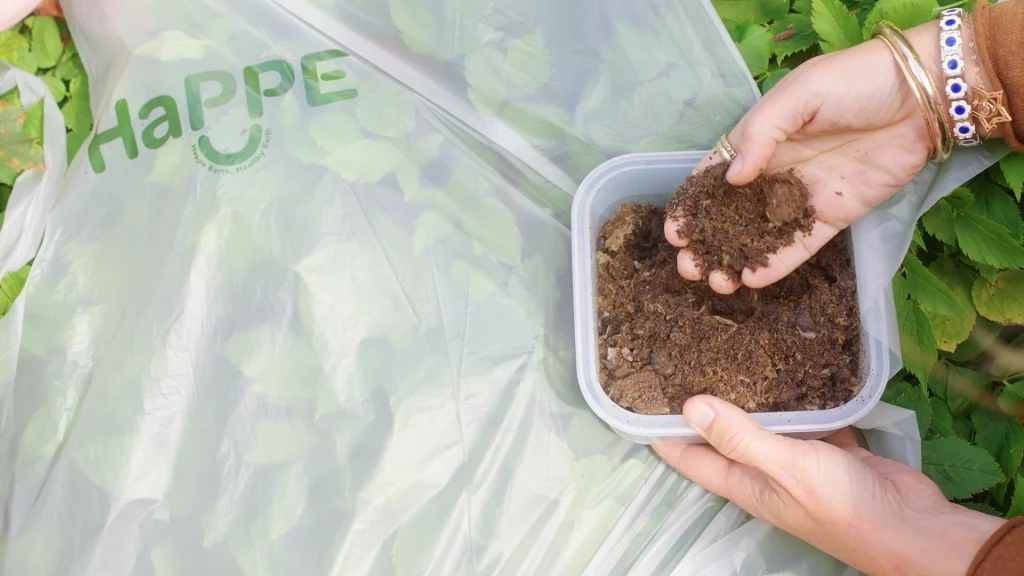
HaPPE Earth’s circular infrastructure only works if the PPE going into it is genuinely compostable. That means the products themselves, not just the system around them, have to be made from plant-based materials that break down cleanly on site.
Bio4Pack supplies those products. The compostable splash aprons at the heart of HaPPE’s system are Bio4Pack’s, and more recently so are the compostable bags, already in use at large events and festival sites across Ireland.
The partnership works because HaPPE Earth needed a supplier whose materials could go directly from hospital ward to on-site composter, with no uncertainty about what happens at the end. Bio4Pack’s track record in compostable materials is what makes that possible. When HaPPE goes into conservative healthcare procurement settings, being able to point to an experienced, specialist supplier is part of how trust gets built. You can’t run a genuinely circular waste system if the PPE inside it isn’t designed to go back to soil.
Where this goes next
HaPPE Earth started with hospitals because that was Mary’s world. But the same principle applies anywhere single-use PPE is used at scale: pharmaceutical manufacturing, food production, large-scale catering. Anywhere a worker puts on an apron or hairnet and throws it in a bin afterwards.
The plant-based materials and on-site processing system can follow the product into any of those settings. The Eunomia/Systemiq report concluded that safe, proven, and cost-saving solutions to healthcare’s plastic waste problem are already within reach. HaPPE’s closed loop is one of them, already running in hospital settings. The compostable products inside it are Bio4Pack’s.
“I think together we actually make a powerful couple,” Mary says.
Bio4Pack makes certified compostable PPE and bags for healthcare, food, and events across Europe. Looking to switch to compostable products for your operations? Get in touch.